
Destination weddings can be incredibly meaningful, but the behind-the-scenes planning is what determines whether it feels calm and joyful or stressful and messy. Here are the factors that actually matter and what to do about each one.

Destination weddings are one of the best ways to turn a wedding into a full experience. Instead of one long day, you get several days of connection, celebration, and memories with the people you love most.
But destination weddings also come with a reality check.
When couples feel stressed or disappointed, it is rarely because the ceremony was not beautiful. It is usually because of logistics, expectations, and the parts of planning no one sees on Instagram.
The make or break checklist
If you want your destination wedding to feel calm and well-run, these basics need to be true.
- Guests have one clear place to book and one clear person to contact.
- Costs and deadlines are shared early, clearly, and more than once.
- The resort is strong at weddings and strong at group guest experience.
- Wedding packages are easy to understand, including what costs extra.
- Communication stays consistent from start to finish.
The most successful destination weddings are not the ones with the fanciest ceremony details. They are the ones that feel easy for guests.
Guest experience sets the tone
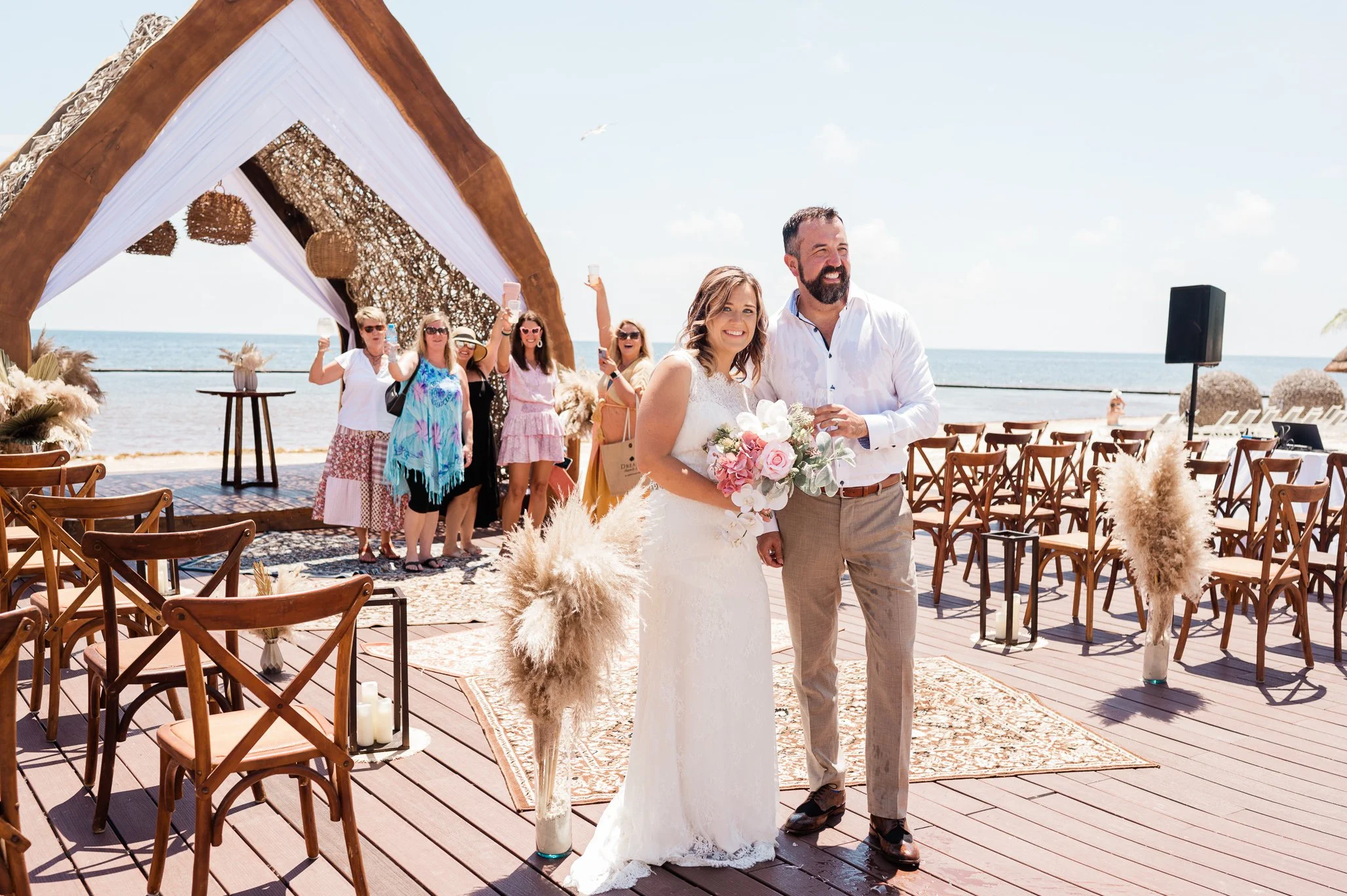
Your ceremony can be stunning, but if guests feel confused, unsupported, or blindsided by costs and logistics, it creates stress for everyone.
What usually causes the stress
- Guests do not know where to book or who to ask questions.
- Costs feel unclear until the last minute.
- Deadlines sneak up and people scramble.
- Transfers and arrivals are left to chance.
What to do instead
- Decide what you want your guest experience to feel like: relaxed and flexible, or more structured with planned events.
- Share a simple overview early: what is optional versus what is expected.
- Choose a resort that handles groups well, not just weddings well.
Resort rules and packages change everything
Many couples assume wedding packages are comparable across resorts. They are not. The details that matter most are often in the fine print.
What to confirm before you choose a resort
- What is truly included versus what requires upgrades.
- Ceremony and cocktail hour time slots and any restrictions.
- Outside vendor rules for photographers, hair and makeup, and decor.
- Guest minimums, room requirements, and group policies.
- How responsive and organized the wedding team is.
Direct advice: do not pick a resort only because the ceremony locations look pretty. Pick a resort because the full experience works for your guests and your vision.
A strong question to ask early is: “What are the most common upgrades couples end up paying for, and what do they typically cost?”
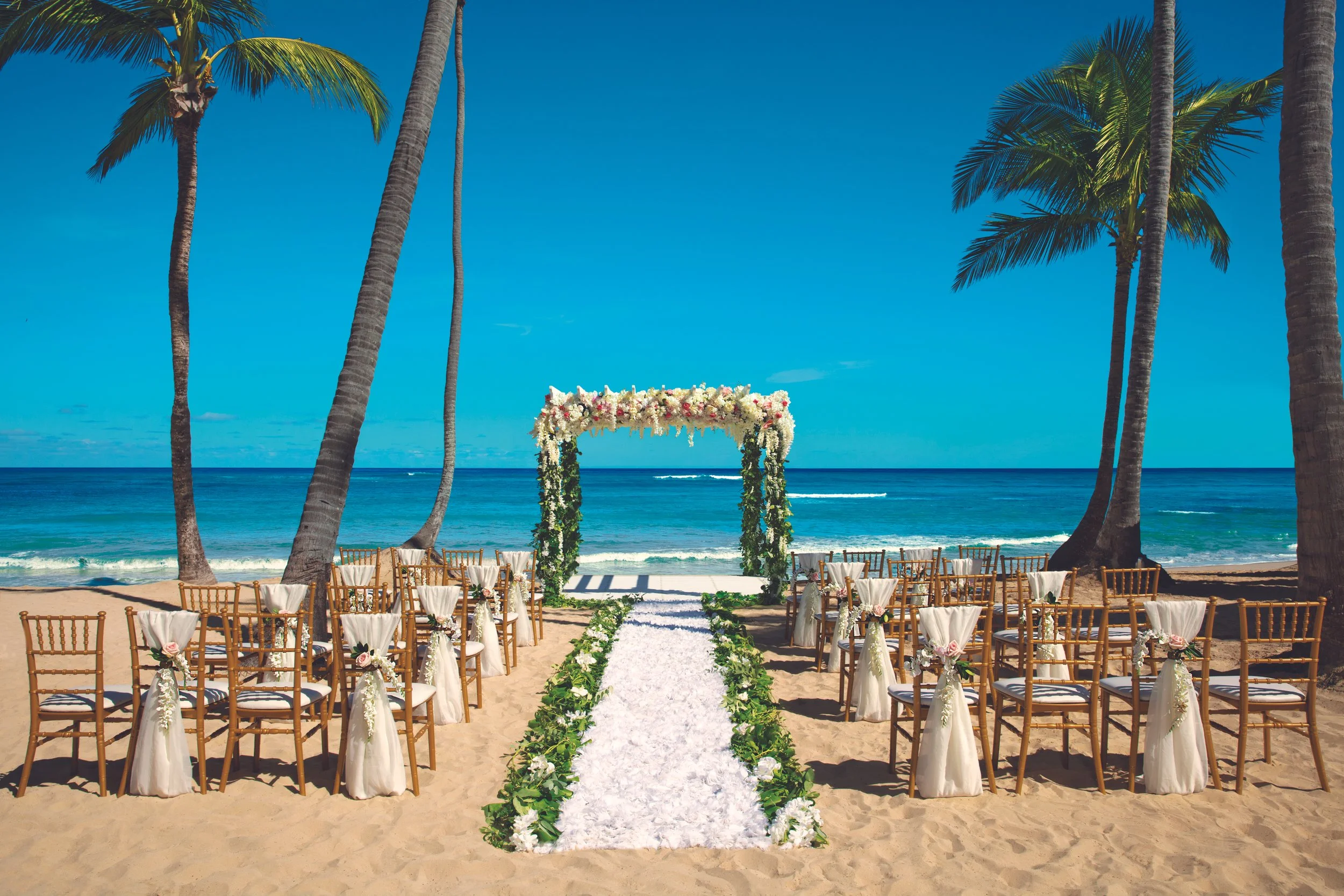
A realistic budget prevents surprises
Destination weddings can be an amazing value, but they are not automatically cheap. Most of the budget impact comes from the choices couples make around events, upgrades, and guest experience.
Where budgets usually grow
- Private dinners and private reception fees
- Upgraded bar packages
- Decor and florals
- Photography and videography
- Welcome parties, excursions, and additional hosted events
What to do
Choose your top 2 to 3 priorities early and spend your budget energy there. Then decide what can stay simple. This is how couples avoid expecting everything to be included and discovering late that the moments they care about most require add-ons.
Guest travel coordination needs a plan
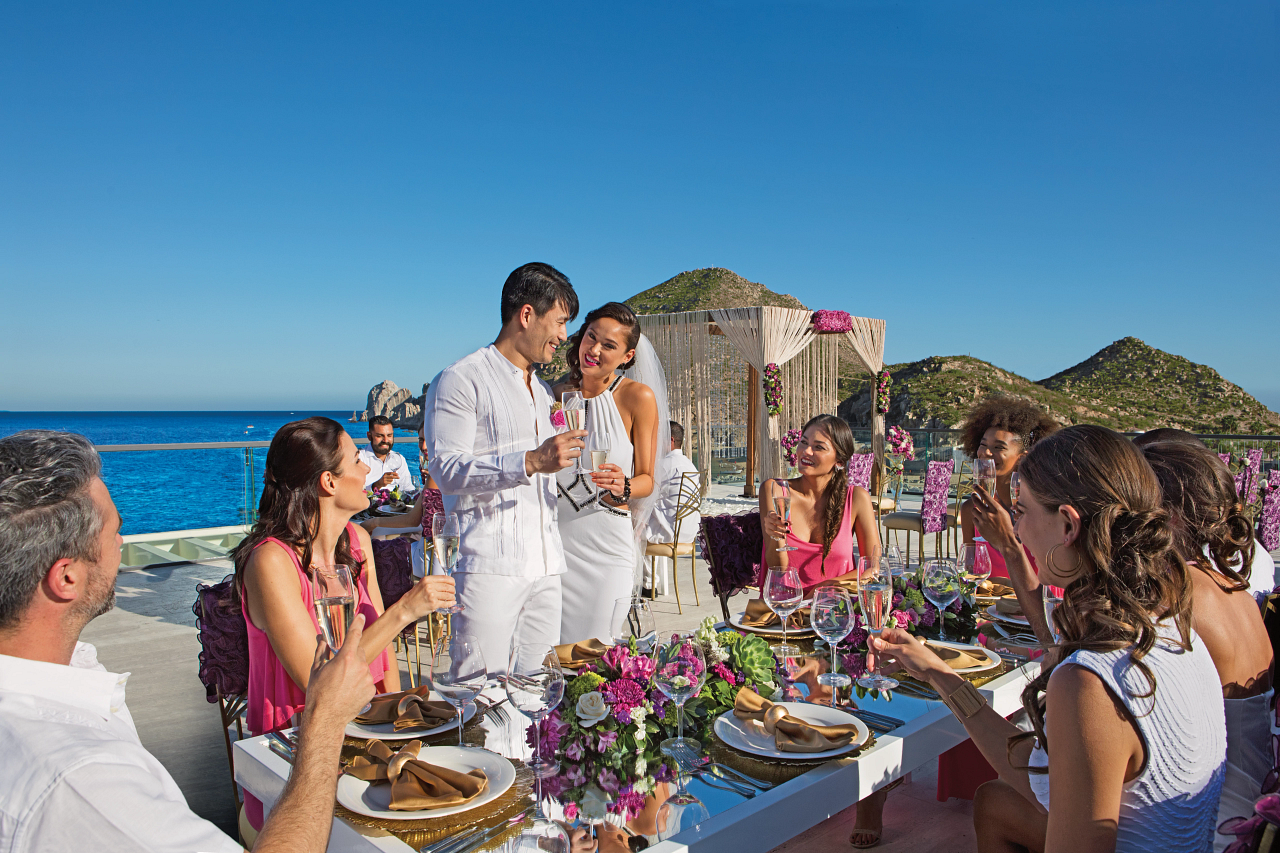
This is the part couples underestimate most. Even with a small guest list, people will have questions about flights, transfers, room types, passports, insurance, arrival timing, payment deadlines, and special requests.
What to do
- Create one official booking path, not scattered texts and screenshots.
- Set deadlines early and repeat them often.
- Track bookings so no one slips through.
- Make transfers part of the plan, not an afterthought.
Direct advice: do not let guests “figure it out later.” Later turns into missed deadlines, higher prices, and last-minute stress.
Clear communication keeps everything calm
The strongest destination wedding experiences have communication that feels clear and consistent. Guests know where to book, what deadlines matter, what to expect, and who to contact when they have questions.
A simple gut check
If guests can answer these questions without texting you, you are in a great place:
- Where do I book?
- When do I need to book by?
- What will this trip roughly cost?
- Who do I contact for help?
The bottom line
A destination wedding is not just choosing a beautiful place to get married. It is creating an experience for you and your guests. The details behind the scenes are what determine whether it feels joyful or overwhelming.
If you already have a destination wedding planning call scheduled, this is exactly what we will work through together.
If you are not sure a destination wedding is right for you, we can talk through that too. And if you decide it is not the right fit, I can still help you plan a honeymoon that feels like the perfect beginning to your next chapter.
Ready to start planning?
Start here and tell me what you are envisioning. We will build the plan, protect the guest experience, and make the logistics feel easy.
Start PlanningDestination wedding FAQ
Is a destination wedding cheaper than a traditional wedding?
Sometimes, but not always. Destination weddings can offer strong value, but total cost depends on guest count, resort level, season, how many private events you host, and which upgrades you choose.
How far in advance should you start destination wedding planning?
Most couples start 12 to 18 months in advance, especially for popular resorts and peak season dates. Starting early usually means better availability, more time for guests, and less stress.
How many guests typically attend a destination wedding?
Many destination weddings land around 20 to 60 guests, but it varies widely. Clear early communication about costs and deadlines tends to increase attendance and reduce last-minute chaos.
Do guests pay for their own travel for a destination wedding?
Most of the time, yes. Guests typically cover flights and their resort stay, while the couple decides what events, upgrades, or experiences they want to host.
What does a destination wedding travel agent do?
A destination wedding travel agent manages guest bookings, deadlines, payments, guidance, transfers, and questions, so the couple is not juggling group travel logistics on top of wedding planning.